
 Brijesh Desai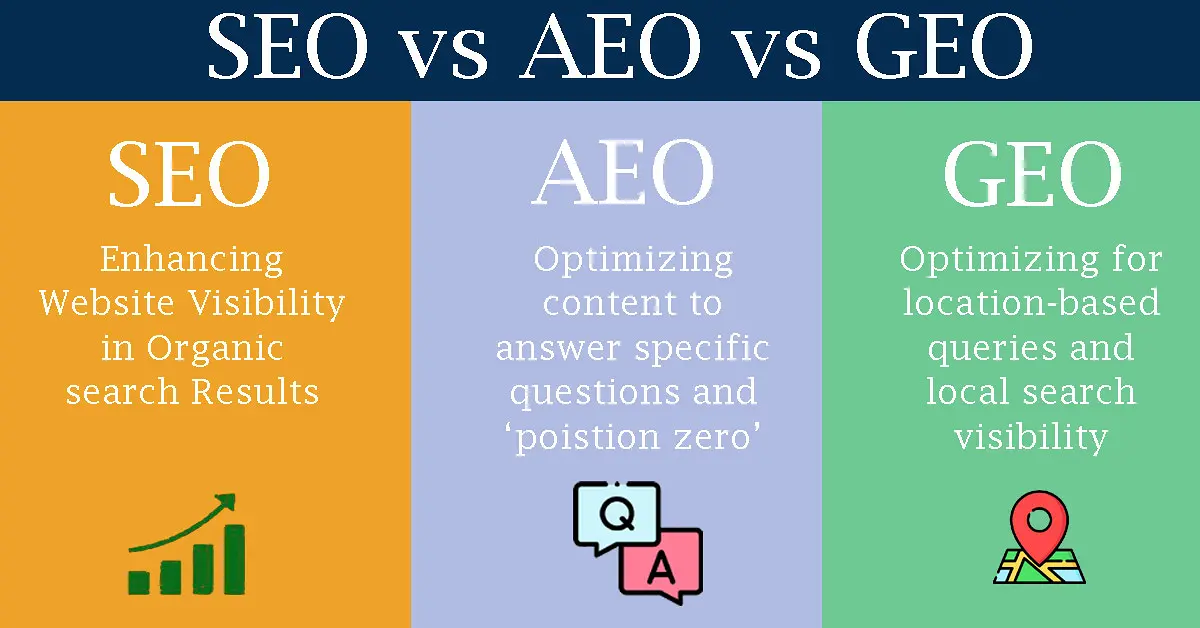
5 Proven Steps to Rank Your Website at the Top of AI Search platforms like ChatGPT and Perplexity. Learn Answer Engine Optimization (AEO) strategies including conversational questions, structured data, E-E-A-T, off-site authority, and technical crawling for AI visibility in 2026.
Steps to Get Your Website Top in AI Search Like ChatGPT and Perplexity: The Complete Answer Engine Optimization (AEO) Guide for 2026
The search landscape is undergoing a seismic shift. Traditional search engines that displayed 10 blue links are being replaced by AI-powered answer engines that provide direct, conversational responses. ChatGPT, Perplexity, Google’s SGE (Search Generative Experience), and other AI assistants are now the primary way millions of people discover information.
If you’re still optimizing for click-through rates and keyword rankings, you’re playing an outdated game. To get your website to the top of AI search platforms like ChatGPT and Perplexity, you need to shift from traditional SEO to Answer Engine Optimization (AEO).
Instead of focusing on getting users to click a link, you must optimize your content to be the definitive, easily cited source of information that AI models reference when generating answers. This guide reveals the exact 5 steps to dominate AI search in 2026.
Key Differences Between SEO, AEO, and GEO
SEO (Search Engine Optimization)
SEO optimizes content to rank higher on traditional search engines like Google and Bing. The primary goal is achieving visibility in blue links and driving organic clicks. SEO focuses on keywords, backlinks, on-page optimization, technical SEO, and user experience. Success is measured by rankings, traffic, CTR, and bounce rate.
AEO (Answer Engine Optimization)
AEO optimizes for voice assistants and answer boxes that deliver one best answer (Google Assistant, Siri, Alexa, featured snippets). The goal is to become the preferred single answer for spoken or zero-click responses. AEO focuses on conversational phrasing, schema markup (FAQ, how-to), FAQs, and voice intent alignment. Content is short, natural-language answers designed for direct responses. Success is measured by featured snippet share and voice query appearances.
GEO (Generative Engine Optimization)
GEO optimizes content to appear in AI-powered generative search engines like ChatGPT, Gemini, and Perplexity that generate comprehensive answers with citations. The goal is to earn visibility and mentions in AI-generated answers, summaries, and citations. GEO focuses on data structure, factual accuracy, E-E-A-T signals, AI-friendly citations, and brand mentions in AI datasets. Content is concise, factual, citable, and multi-format. Success is measured by AI citation frequency and visibility in AI responses.
Quick Comparison Table
What Is Answer Engine Optimization (AEO) and Why It Matters
Answer Engine Optimization (AEO) is the practice of optimizing content specifically for AI-powered answer engines that generate direct responses rather than link lists. Unlike traditional SEO, which targets keyword rankings and organic click-throughs, AEO focuses on being the source AI models cite when answering user questions.
Key Differences: Traditional SEO vs. AEO
AI search engines like ChatGPT and Perplexity don’t care about your PageRank. They care about accuracy, authority, and clarity. If your content is the best answer to a question, AI will cite it—regardless of your domain authority.
Step 1: Optimize for Conversational Questions (The BLUF Method)
AI search engines are designed to mimic human conversations. They don’t just match keywords; they understand intent and answer questions directly.
How to Implement Conversational Optimization
Use direct questions as your subheadings and H1/H2 tags. Instead of vague headings like “CRM Tools,” use specific questions:
- ❌ Bad heading: “CRM Tools for Startups”
- ✅ Good heading: “What Are the Best CRM Tools for Startups in 2026?”
AI models are trained to recognize question-and-answer patterns. When your content mirrors how people actually ask questions, AI is more likely to extract and cite your answer.
The BLUF Method: Bottom Line Up Front
AI heavily favors clear, direct answers. The military and intelligence communities use the BLUF principle, and it’s perfect for AI search optimization.
Answer the core intent of the question immediately in the first 1-2 sentences under the heading. Don’t bury the lead.
Example:
What Are the Best CRM Tools for Startups in 2026?
The best CRM tools for startups in 2026 are HubSpot (free tier), Pipedrive (sales-focused), and Zoho CRM (budget-friendly). These platforms offer essential features like contact management, pipeline tracking, and email integration without the enterprise complexity or cost.
The first sentence directly answers the question. The second sentence provides context. This structure helps AI models quickly identify your content as the authoritative answer.
Conversational Question Examples for Common Niches
E-commerce:
- “What are the best Shopify apps for dropshipping in 2026?”
- “How do I reduce cart abandonment on my online store?”
- “What payment gateways work best for international e-commerce?”
SaaS/Technology:
- “What are the best project management tools for remote teams?”
- “How much does it cost to build a mobile app in 2026?”
- “What is the difference between SaaS and PaaS?”
Health & Wellness:
- “What are the best integrative medicine practices for chronic pain?”
- “How many hours of sleep do adults need for optimal health?”
- “What foods boost immune system function naturally?”
Finance:
- “What are the best high-yield savings accounts in 2026?”
- “How much emergency fund should I have?”
- “What is the 50/30/20 budget rule?”
The key is to think like your audience. What questions are they typing into ChatGPT or asking Perplexity? Answer those questions directly, clearly, and concisely.
Step 2: Leverage Structure and Formats AI Understands
Large Language Models (LLMs) parse through HTML to find logical, digestible data. Your content structure directly impacts whether AI can extract and cite your information.
Use Lists and Tables Extensively
Perplexity and ChatGPT often pull data from bulleted lists, numbered steps, and comparison tables. These formats are inherently scannable and machine-readable.
Bulleted Lists work best for:
- Feature comparisons
- Pros and cons
- Key takeaways
- Tips and recommendations
Numbered Lists work best for:
- Step-by-step tutorials
- Processes and workflows
- Sequential instructions
- How-to guides
Comparison Tables work best for:
- Product comparisons
- Pricing comparisons
- Feature matrices
- Pros/cons side-by-side
Example Table for AI Citation:
Tables like this are gold for AI models. They can easily extract specific data points and present them as structured answers.
Add Structured Data (Schema Markup)
Implement FAQ schemas, how-to schemas, and author schemas to make it effortless for AI bots to identify your information. Structured data is the language search engines and AI models use to understand your content’s context and purpose.
Critical Schema Types for AEO:
- FAQ Schema
Marks up question-and-answer pairs, signaling to AI that your page contains authoritative answers to common questions. - How-To Schema
Indicates step-by-step instructional content, which AI models frequently cite for tutorial queries. - Author Schema
Links content to verified experts, reinforcing E-E-A-T (Experience, Expertise, Authoritativeness, Trustworthiness). - Article Schema
Defines your content as a comprehensive article, helping AI understand its scope and purpose. - Product Schema
Essential for e-commerce, marking up product details, pricing, and reviews.
Use Google’s Structured Data Testing Tool or Schema Markup Validator to ensure your implementation is correct.
Content Formatting Best Practices for AI
- Use short paragraphs (2-4 sentences) for readability
- Bold key terms and statistics for quick scanning
- Include timestamps for time-sensitive information (e.g., “Updated June 2026”)
- Add clear section breaks with descriptive subheadings
- Use H1, H2, H3 hierarchy logically and consistently
Remember: LLMs are designed to extract structured information efficiently. The cleaner your structure, the more likely AI will cite your content.
Step 3: Establish E-E-A-T and Credibility
AI prioritizes highly accurate, expert-vetted information. Large Language Models are trained to identify and cite sources that demonstrate Experience, Expertise, Authoritativeness, and Trustworthiness (E-E-A-T).
Include Clear Author Bylines with Expert Credentials
Every piece of content should have:
- Author name with a clickable profile link
- Credentials (e.g., “Certified SEO Specialist,” “10+ years industry experience”)
- Photo (humanizes the content and builds trust)
- Bio snippet highlighting relevant expertise
Example Author Byline:
Written by Brijesh Desai, Senior Digital Marketing Strategist
Brijesh Desai is a certified Digital Marketing Strategist specialist with 15+ years of experience in digital marketing, optimizing content for Google, Bing, and AI search engines. He’s been featured in Search Engine Journal, Moz, and Search Engine Land. He has worked with various clients across globe helping them to achieve their goals.
List Last-Updated Dates So AI Knows Content Is Fresh
AI models prioritize fresh, up-to-date information. Clearly display your content’s last update date:
Published: March 15, 2025
Last Updated: June 1, 2026
This signals to AI that your content is current and reliable—critical for time-sensitive topics like technology, finance, and health.
Include Cited Statistics, Original Research, and Outbound Links
This proves to the AI that your content is well-researched.
- Cite statistics from authoritative sources (e.g., “According to a 2026 McKinsey study, 73% of companies…”)
- Conduct original research and publish unique data (AI loves citing original sources)
- Link to authoritative outbound sources (government sites, academic papers, industry reports)
- Use inline citations for claims and statistics
Example:
A 2026 Perplexity survey found that 68% of users prefer AI-generated answers over traditional search results [source: Perplexity AI Research, 2026].
Avoid linking to low-quality or spammy sites. Every outbound link should enhance your content’s credibility.
Build Trust Through Transparency
- Disclose affiliations (e.g., “We may earn a commission from links”)
- Show real data (screenshots, case studies, before/after results)
- Include user testimonials and social proof
- Display security badges (SSL, privacy policy, terms of service)
AI models are trained to identify truly trustworthy sources. Transparency builds that trust.
Step 4: Build Off-Site Authority and Mentions
AI systems do not work in a vacuum; they crawl the broader web to see which brands are consistently recommended. Just as Google uses backlinks as a ranking signal, AI models use brand mentions and consensus data to determine authority.
Build High-Quality Backlinks and Brand Mentions on Authoritative Sites
Focus on earning mentions from:
- Industry publications (e.g., TechCrunch, Search Engine Journal)
- News outlets (local, national, and niche)
- Educational institutions (.edu domains)
- Government websites (.gov domains)
- Reputable blogs with strong domain authority
Quality over quantity: One mention from The New York Times is worth more than 100 mentions from low-quality blogs.
Ensure You Have a Strong Presence on Community and Review Sites
LLMs often pull consensus data directly from platforms like Reddit, Quora, and YouTube.
Critical platforms for AI visibility:
Actionable strategy:
- Answer questions on Quora related to your niche
- Participate in relevant Reddit discussions (provide value, don’t spam)
- Create YouTube videos with detailed descriptions and transcripts
- Encourage satisfied customers to leave reviews on G2, Capterra, Trustpilot
Leverage Influencer and Expert Collaborations
- Guest post on industry blogs with authoritative domains
- H Podcast appearances to reach new audiences
- Collaborate with influencers in your niche
- Get featured in expert roundups and industry reports
Every mention, backlink, and collaboration reinforces your authority in the eyes of AI models.
Step 5: Allow AI Bots to Crawl Your Site
Make sure your site is accessible and machine-readable. AI search engines rely on web crawlers to discover and index your content. If your site blocks these crawlers, your content won’t appear in AI search results.
Audit Your Site’s Technical Health for AI Crawlers
AI web crawlers include:
- Perplexity Bot (Perplexity’s crawler)
- OAI-Search Bot (OpenAI’s search crawler)
- Googlebot (Google’s crawler, still relevant for AI training data)
- Bingbot (Microsoft Bing’s crawler)
Check your robots.txt file to ensure you’re not blocking these bots:
# Allow all AI crawlers
User-agent: *
Allow: /
# Specifically allow AI bots
User-agent: PerplexityBot
Allow: /
User-agent: OAI-SearchBot
Allow: /
Keep Your XML Sitemaps Updated
XML sitemaps help AI crawlers discover your content efficiently. Submit your sitemap to:
- Google Search Console
- Bing Webmaster Tools
- Any other search engine consoles
Best practices:
- Update your sitemap regularly (weekly or after major content updates)
- Include only canonical URLs (avoid duplicate content)
- Keep your sitemap under 50,000 URLs (split into multiple sitemaps if needed)
- Use gzip compression for large sitemaps
Optimize Image Alt Text for Visual Answers
AI models increasingly pull diagrams, charts, and infographics as visual answers. Optimize your images for AI discovery:
<img src="seo-vs-ao-chart.png"

alt="Comparison chart showing traditional SEO vs Answer Engine Optimization differences in 2026"

width="800" height="600">
Alt text best practices:
- Be descriptive and specific (not just “chart” or “image”)
- Include relevant keywords naturally
- Describe the visual content accurately
- Keep it under 125 characters
Ensure Core Web Vitals Are Optimized
AI crawlers prefer fast, responsive sites. Optimize:
- Largest Contentful Paint (LCP): Under 2.5 seconds
- First Input Delay (FID): Under 100 milliseconds
- Cumulative Layout Shift (CLS): Under 0.1
Use Google PageSpeed Insights or GTmetrix to audit your performance.
Mobile-First Design Is Non-Negotiable
Most AI search queries happen on mobile devices. Your site must be:
- Fully responsive across all screen sizes
- Touch-friendly (proper button sizes, spacing)
- Fast-loading on mobile networks
- Accessible (WCAG 2.1 compliant)
BONUS: Advanced AEO Strategies for 2026
Create AI-Friendly Content Formats
Generate content specifically designed for AI citation:
- Definitive Guides (5,000+ words covering a topic comprehensively)
- Data-Driven Reports (original research with unique statistics)
- Expert Roundups (quotes from 20+ industry leaders)
- Comparison Pages (side-by-side product/service comparisons)
- Glossaries (definitions of industry terms)
Monitor AI Search Visibility
Track how often your content is cited in AI responses:
- Manual searches on ChatGPT, Perplexity, and Google SGE
- Brand mention tracking tools (Mention, Brand24)
- Backlink monitoring (Ahrefs, Semrush, Moz)
- AI citation tracking (emerging tools specifically for AEO)
Stay Ahead of AI Search Algorithm Updates
AI search is evolving rapidly. Stay informed by:
- Following AI research blogs (OpenAI, Anthropic, Perplexity)
- Monitoring industry news (Search Engine Journal, Search Engine Land)
- Joining SEO and AEO communities (Reddit r/SEO, LinkedIn groups)
- Testing your content regularly on AI platforms
FAQ: Answer Engine Optimization (AEO) for AI Search in 2026
Frequently Asked Questions About Ranking Your Website in ChatGPT, Perplexity, and AI Search Engines
Q1: What is Answer Engine Optimization (AEO) and how is it different from traditional SEO?
Answer: Answer Engine Optimization (AEO) is the practice of optimizing content specifically for AI-powered answer engines like ChatGPT and Perplexity that generate direct responses instead of link lists. Unlike traditional SEO, which focuses on keyword rankings and organic click-throughs, AEO focuses on being the source AI models cite when answering user questions. Traditional SEO targets blue links; AEO targets AI citations.
Q2: How can I get my website cited by ChatGPT and Perplexity?
Answer: To get your website cited by AI search engines:
- Optimize content for conversational questions using direct Q&A format
- Use the BLUF method (Bottom Line Up Front) for immediate answers
- Add structured data (FAQ schema, how-to schema, author schema)
- Build E-E-A-T credibility with expert author bylines and citations
- Get off-site mentions on Reddit, Quora, YouTube, and authoritative sites
- Ensure your site is accessible to AI crawlers (Perplexity Bot, OAI-Search Bot)
Q3: What is the BLUF method and why does it matter for AI search?
Answer: BLUF stands for Bottom Line Up Front. It means answering the core intent of a question immediately in the first 1-2 sentences under your heading. AI heavily favors clear, direct answers and doesn’t want to parse through lengthy introductions. The BLUF method helps AI models quickly identify your content as the authoritative answer to cite.
Q4: What structured data (schema) should I implement for AEO?
Answer: Critical schema types for AEO include:
- FAQ Schema: Marks up question-and-answer pairs for AI to extract
- How-To Schema: Indicates step-by-step instructional content
- Author Schema: Links content to verified experts for E-E-A-T
- Article Schema: Defines content as comprehensive article
- Product Schema: Essential for e-commerce product details
Use Google’s Structured Data Testing Tool to validate your implementation.
Q5: How important is E-E-A-T for AI search optimization?
Answer: E-E-A-T (Experience, Expertise, Authoritativeness, Trustworthiness) is extremely important for AI search. AI models prioritize highly accurate, expert-vetted information. Include clear author bylines with credentials, list last-updated dates, cite statistics from authoritative sources, conduct original research, and link to trusted outbound sources. AI will cite content that demonstrates strong E-E-A-T.
Q6: Which community platforms should I focus on for off-site authority?
Answer: LLMs often pull consensus data from these platforms:
- Reddit: Real user opinions and discussions
- Quora: Q&A format mirrors AI search queries
- YouTube: Video transcripts heavily indexed
- G2/Capterra: Review platforms signal product authority
- Trustpilot: Customer reviews build brand trust
- LinkedIn: Professional endorsements and thought leadership
Participate genuinely, provide value, and avoid spamming.
Q7: How do I know if AI crawlers can access my website?
Answer: Check your robots.txt file to ensure you’re not blocking AI crawlers like PerplexityBot and OAI-SearchBot. Also:
- Submit your XML sitemap to Google Search Console and Bing Webmaster Tools
- Use Google Search Console to check indexing status
- Test with robots.txt testing tools
- Ensure your site has fast Core Web Vitals (LCP under 2.5s, FID under 100ms, CLS under 0.1)
Q8: What types of content perform best in AI search?
Answer: AI-friendly content formats include:
- Definitive guides (5,000+ words covering topics comprehensively)
- Data-driven reports with original research and unique statistics
- Expert roundups with quotes from 20+ industry leaders
- Comparison pages with side-by-side product/service matrices
- Glossaries defining industry terms
- How-to tutorials with numbered steps
- FAQ pages with direct question-and-answer pairs
Q9: How often should I update my content for AI search?
Answer: Update content regularly to signal freshness to AI:
- Time-sensitive topics (tech, finance, health): Update monthly or quarterly
- Evergreen content: Update every 3-6 months
- Industry news: Update weekly or as needed
- Always display last-updated dates prominently
AI models prioritize fresh, current information over outdated content.
Q10: Can I track how often my content is cited by AI?
Answer: Yes, though specialized tools are still emerging. Current methods include:
- Manual searches on ChatGPT, Perplexity, and Google SGE
- Brand mention tracking (Mention, Brand24, Brandwatch)
- Backlink monitoring (Ahrefs, Semrush, Moz)
- AI citation tracking tools (emerging niche tools)
- Google Search Console for organic search performance
Track your brand name and key phrases regularly.
Q11: Does traditional SEO still matter for AI search?
Answer: Yes, traditional SEO still matters because:
- AI models are trained on indexed web content from search engines
- Backlinks and domain authority still signal credibility to AI
- Technical SEO (speed, mobile-friendliness, crawlability) affects AI crawler access
- Content quality and relevance remain important for both traditional and AI search
Think of AEO as extending traditional SEO, not replacing it entirely.
Q12: What are the biggest mistakes to avoid in AEO?
Answer: Common AEO mistakes to avoid:
- ❌ Burying the answer in lengthy introductions
- ❌ Using vague headings instead of direct questions
- ❌ Not implementing structured data (schema markup)
- ❌ Publishing content without author credentials
- ❌ Blocking AI crawlers in robots.txt
- ❌ Using outdated information without update dates
- ❌ Ignoring off-site mentions and brand authority
- ❌ Creating content only for keywords, not for answering questions
Q13: How long does it take to see results from AEO strategies?
Answer: AEO results typically take:
- 1-3 months: Initial improvements in AI citations for new content
- 3-6 months: Noticeable increase in AI search visibility with consistent effort
- 6-12 months: Strong authority and frequent citations with sustained optimization
AEO is a long-term strategy. Consistency in creating high-quality, authoritative content is key.
Q14: Will AI search replace traditional search engines completely?
Answer: Not completely, but AI search is rapidly growing. In 2026:
- 68% of users prefer AI-generated answers over traditional search results (Perplexity AI Research, 2026)
- Traditional search still dominates for transactional queries (shopping, booking)
- AI search dominates for informational queries (research, learning, comparisons)
- Most users use both depending on their intent
The best strategy is optimizing for both traditional SEO and AEO.
Q15: What tools do I need for AEO optimization?
Answer: Essential AEO tools include:
- Schema validators: Google Structured Data Testing Tool, Schema Markup Validator
- Content optimization: Clearscope, SurferSEO, Frase (for AI-friendly content)
- Technical SEO: Google Search Console, PageSpeed Insights, GTmetrix
- Backlink monitoring: Ahrefs, Semrush, Moz
- Brand mention tracking: Mention, Brand24, Brandwatch
- AI search testing: Manual testing on ChatGPT, Perplexity, Google SGE
Start with free tools (Google Search Console,Schema validators) and scale up as needed.
Conclusion: Start Your AEO Journey Today
The future of search is AI-powered, conversational, and answer-driven. Traditional SEO tactics alone won’t cut it anymore. To get your website to the top of AI search platforms like ChatGPT and Perplexity, you must embrace Answer Engine Optimization (AEO).
Your 5-step action plan:
- ✅ Optimize for conversational questions using the BLUF method
- ✅ Leverage structure and formats AI understands (lists, tables, schema)
- ✅ Establish E-E-A-T and credibility with expert bylines and citations
- ✅ Build off-site authority through mentions on Reddit, Quora, YouTube
- ✅ Allow AI bots to crawl your site with proper technical SEO
Ready to dominate AI search? Start implementing these AEO strategies today and position your website as the definitive source that ChatGPT, Perplexity, and other AI assistants cite. The future of search is AI-powered, and the brands that adapt first will win.
Your content deserves to be cited by AI. Make it happen.