
 Brijesh Desai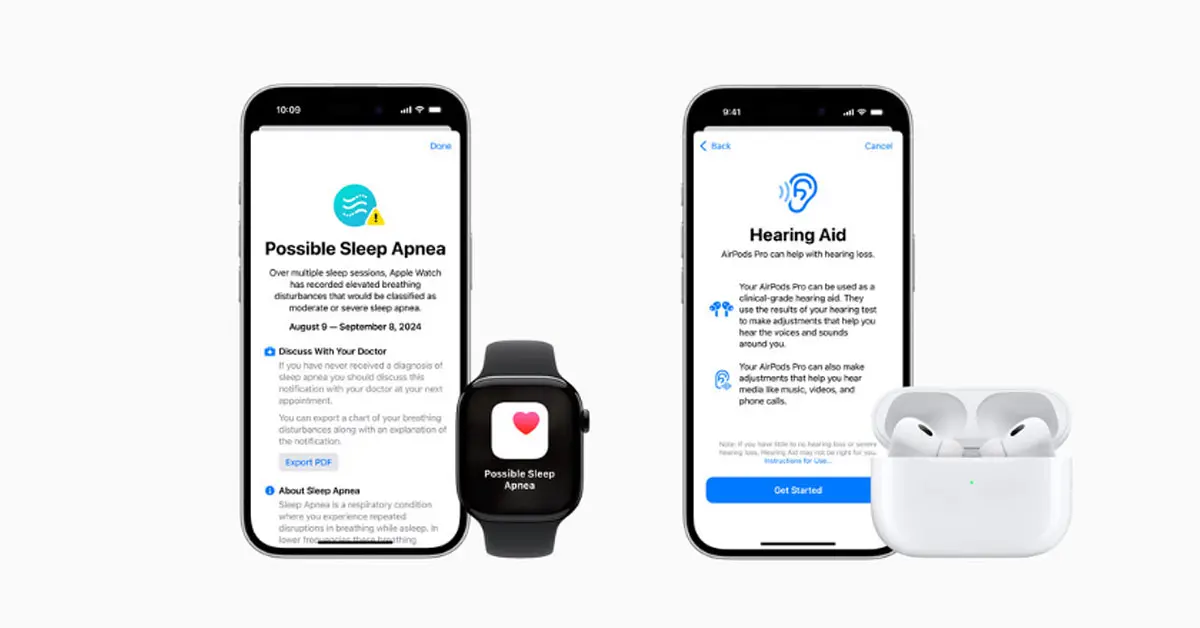
Apple Watch and AirPods health features get major new global expansions in 2026, with sleep apnea notifications, hypertension alerts, and Hearing Test/Hearing Aid tools now live in India, Italy, Taiwan, and more than 160 countries; here’s what’s new, which devices you need, and how this reshapes Apple’s health‑first wearables strategy.
Apple Watch and AirPods health features get major new global expansions isn’t just a routine software‑update headline; it’s a quiet but powerful signal that Apple is treating its wearables as a genuine health‑platform, not just a fitness‑tracker. In 2026, the company has pushed Apple Watch‑based health monitoring and AirPods‑driven hearing‑care tools into dozens of new markets, including India, Italy, Taiwan, and a long list of countries across Europe, the Middle East, and Asia. The result is a bigger, more globally relevant ecosystem where your watch and earbuds can quietly nudge you toward a doctor, flag a potential sleep disorder, or even test your hearing from the couch.
What’s actually expanding—and where
At the core of this expansion are three intertwined health‑function families: Apple Watch sleep apnea and hypertension notifications, and AirPods‑based Hearing Test and Hearing Aid. All of these started in a handful of early‑adoption markets, but Apple’s latest push has stretched them into many more regions.
Sleep apnea notifications on Apple Watch
Apple Watch now watches your breathing and positional patterns every night, using motion data from the accelerometer and algorithmic analysis to detect breathing disturbances consistent with moderate‑to‑severe sleep apnea. The system doesn’t “diagnose” anything; it flags recurring patterns and prompts you to see a clinician.
This feature is already live in more than 150 countries and regions, and now, thanks to a fresh 2026 rollout, it’s fully available in India, Taiwan, and several others. For users in those markets, that means the Watch can now quietly raise a red flag if you’re likely struggling with interrupted breathing at night.
Hypertension notifications on Apple Watch
Hypertension tracking leans on 30 days of heart‑rate and activity data collected by the Apple Watch’s sensors. The model looks for patterns that suggest consistently elevated blood‑pressure trends and then prompts you to get checked by a doctor.
After earlier launches in the U.S. and a small group of countries, Apple has now expanded this to places like Taiwan, the United Arab Emirates, Saudi Arabia, and Vietnam. The idea is to give people in high‑stress, high‑risk environments a low‑friction way to catch early‑stage hypertension before it spirals.
Hearing‑related tools on AirPods
On the audio side, Apple has doubled down on hearing‑care features via AirPods Pro:
- Hearing Test: A clinically‑validated, in‑ear test that runs on AirPods Pro 2 and 3, letting you check your hearing levels at home without needing a specialist visit.
- Hearing Aid with Conversation Boost: Apple’s over‑the‑counter hearing‑aid mode, which turns compatible AirPods Pro into a discreet hearing‑assistive device, with a “Conversation Boost” feature that amplifies the person speaking directly to you while reducing background noise.
Apple has now flipped the switch for Hearing Aid in Italy, and for Hearing Test in India, among dozens of other countries where these tools are supported by local regulators.
Apple’s senior leadership has been clear: select Apple Health features are now live in over 160 countries and regions, a big jump from the handful of initial markets. That’s a sign the company is treating Apple Health as a genuinely global product layer, not just a U.S.‑only twist.
Which hardware you actually need
None of these features are universal across the Apple‑wearables lineup. They’re tightly tied to newer hardware and region‑specific approvals:
Apple Watch sleep apnea and hypertension
Sleep apnea requires Apple Watch Series 9 or later, Apple Watch Ultra 2 or later, or Apple Watch SE (3rd generation) with a 30‑day‑worth of sleep‑data history.
Hypertension notifications need Series 9 or later, or Ultra 2 or later, plus stable heart‑rate tracking over a month.
If you’re still on a Series 6 or 7, you’re locked out of these newer health‑model features, which is a gentle but effective push toward hardware upgrades.
AirPods Hearing Test and Hearing Aid
Hearing Test and Hearing Aid (with Conversation Boost) work only on AirPods Pro 3 and AirPods Pro 2.
The system needs a compatible iOS device (iPhone or iPad) running the latest supported software, and the relevant AirPods firmware.
First‑generation AirPods Pro users may still get fitness‑style audio features, but they’re excluded from the clinical‑style hearing‑test and hearing‑aid experience.
What this means for users
For people who already own the right hardware, the new 2026 expansions transform the Apple Watch and AirPods from “nice‑to‑have” gadgets into proactive health companions:
More screening, less friction
Sleep apnea and hypertension notifications give you a subtle, non‑invasive way to spot early‑stage issues that might otherwise go unnoticed for months. In countries like India and Italy, where specialist access can be slow or expensive, that kind of early warning can be a game‑changer.
Hearing‑care at home
The Hearing Test on AirPods Pro lets you regularly check your auditory health in a quiet room, then decide whether you want to move into Hearing Aid mode if you notice a decline. Conversation Boost is especially handy in noisy environments — it can make family dinner or a busy café feel a lot more manageable for people with mild hearing loss.
A unified Apple Health view
All of this data flows into the Apple Health app, giving you a central dashboard where you can see your heart‑rate baselines, sleep apnea alerts, and hearing‑test results side‑by‑side. That’s a big step up from bouncing between different third‑party apps.
Why Apple is doing this now
From a strategic perspective, Apple Watch and AirPods health features get major new global expansions makes sense on several levels:
- Regulatory confidence: The fact that Apple can now roll out hypertension‑style and sleep‑apnea features in so many markets is a sign that regulators are starting to trust wearable‑based algorithms more. Apple’s clinical‑validation work and published studies give these tools a leg up over more speculative health‑apps.
- Lock‑in and ecosystem stickiness: The more Apple Watch and AirPods are tied to your health and hearing, the harder it becomes to leave the Apple ecosystem. If your watch is quietly tracking your blood‑pressure risk and your AirPods are your primary hearing aid, switching to another platform isn’t just a matter of changing apps; it’s a medical‑lifestyle decision.
- Differentiation vs competitors: In a crowded wearables market, health‑features are one of the few vectors where Apple can charge a premium. The “watch that can nudge you toward a doctor” and “earbuds that can act as hearing aids” are a lot more compelling than “just another step‑counter.”
What’s next on the road
Apple’s 2026 expansion is probably just the beginning. As sensor data, AI‑analysis, and regulatory approvals evolve, expect:
- More AI‑driven risk models: Future watchOS and iOS updates could add AI‑assisted trend analysis for heart‑rate variability, arrhythmia, or even early‑stage chronic‑disease indicators.
- Tighter telehealth integrations: Apple may start building deeper hooks into regional telehealth platforms, so that when your watch flags a hypertension pattern, you can book a virtual consult directly from the Health app.
- New hardware‑driven features: Watch‑probes for blood‑pressure, glucose‑sensing, or even basic respiratory‑analysis may follow once the regulatory and accuracy hurdles are cleared.
For now, if you’re in one of the newly‑covered markets and you’ve got the right hardware, it’s a good time to dive into the Health app, check which features are active, and see how your watch and AirPods can quietly become part of your health‑management stack. If you’re still on older gear, this expansion is a clear sign that Apple is leaning hard into wearables‑as‑health‑tools — and that upgrading your hardware might be worth it if you care about passive health monitoring.