
 Brijesh Desai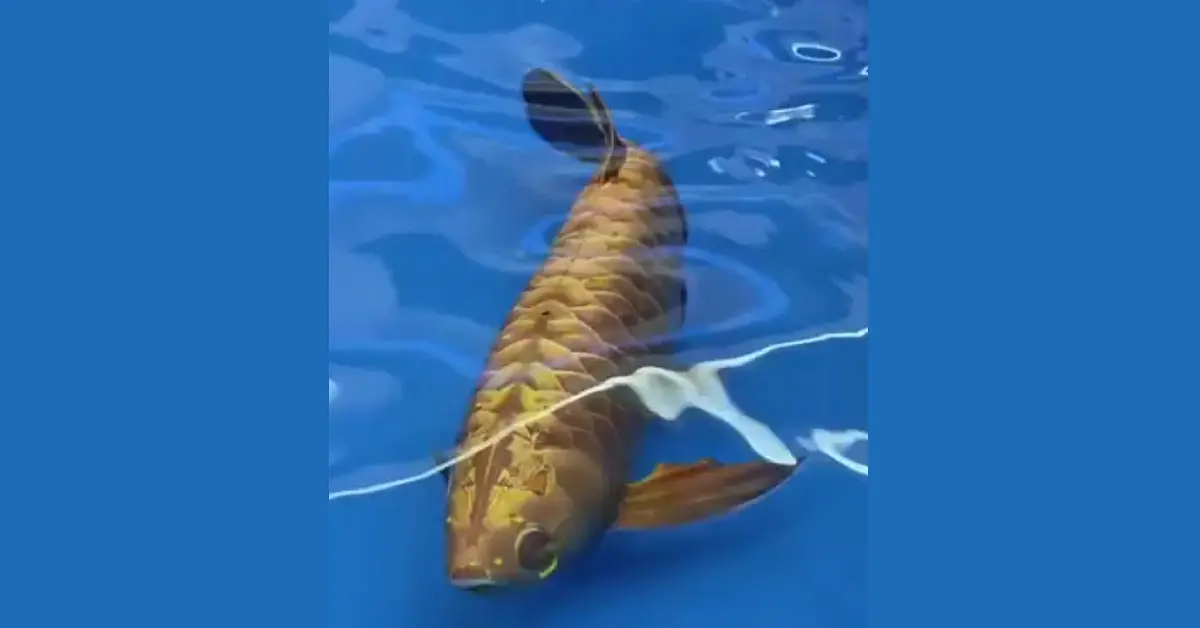
China unveils BG‑5 Golden Dragon Fish, fish‑like robot in Beijing, a bionic arowana‑style underwater robot with propeller‑free swimming, sensors and cameras for navigation and monitoring.
China unveils BG‑5 Golden Dragon Fish, fish‑like robot in Beijing
China unveils BG‑5 Golden Dragon Fish, fish‑like robot in Beijing, a highly realistic bionic underwater robot modelled on the golden arowana (often called “Golden Dragon Fish”). The device was showcased at the 2026 China International Fair for Trade in Services (CIFTIS) at Shougang Park, where it swam in a tank and drew crowds for its lifelike appearance and smooth, natural movements.
Developed by Boya Gongdao Marine Technology, the BG‑5 is designed to look and swim almost indistinguishably from a real arowana. Developers say the robot can autonomously navigate through water, interact with visitors at exhibitions, and perform underwater observation and monitoring tasks.
Design and movement
The BG‑5 Golden Dragon Fish is a biomimetic robot, meaning its shape and motion are inspired by a living species—in this case, the prized golden arowana, known for its shimmering scales and graceful swimming.
Key design features include:
- Propeller‑free propulsion: The robot moves using tail and fin motions instead of conventional propellers, closely mimicking natural fish swimming.
- Fluid simulation technology: Onboard algorithms model water flow and body dynamics to produce smooth, energy‑efficient gliding.
- Realistic appearance: The outer shell, colouring, and swimming style are engineered to reduce the “uncanny” mechanical look and blend in with real fish.
Videos from the exhibition show the BG‑5 turning, accelerating, and hovering in a way that many observers found difficult to distinguish from a live fish at first glance.
Sensors and capabilities
Beyond its appearance, the BG‑5 is equipped with functional systems for real‑world underwater tasks:
- Head‑mounted sonar and locator sensors for real‑time environmental monitoring.
- Cameras that can be used for visual inspection and recording.
- Autonomous navigation, allowing the robot to swim predefined routes or respond to obstacles.
- Potential integration with additional payloads for specialised missions.
Developers describe the robot as suitable for:
- Inspecting water bodies and underwater infrastructure (pipes, cables, dams).
- Environmental monitoring and data collection.
- Covert or low‑disturbance observation, where a conventional drone or submersible would be too noisy or conspicuous.
Where it was shown
The BG‑5 was unveiled at CIFTIS 2026 in Beijing, one of China’s major trade and technology fairs. The robot swam in a blue tank at the Boya Gongdao booth, with signage describing it as a “bionic robot fish” that looks exactly like a living golden arowana.
Footage shared by Chinese state media and journalists quickly went viral, with many viewers commenting on how difficult it was to tell the robot from a real fish in short clips.
Why fish‑like robots matter
Fish‑shaped underwater robots are part of a broader push toward biomimetic marine robotics. Compared with traditional propeller‑driven AUVs (autonomous underwater vehicles), they offer:
- Quieter operation, reducing disturbance to marine life and making them harder to detect.
- More natural manoeuvrability in complex environments such as reefs, wrecks, or crowded infrastructure.
- Potentially better energy efficiency for certain swimming patterns and missions.
Applications range from scientific research and environmental monitoring to security, inspection, and even entertainment or education at aquariums and exhibitions.
Summary: China unveils BG‑5 Golden Dragon Fish, fish‑like robot in Beijing, a bionic arowana‑style underwater robot with propeller‑free swimming, fluid simulation, and onboard sensors and cameras. Shown at CIFTIS 2026, it is designed for autonomous navigation, underwater monitoring, and low‑disturbance observation.