
 Brijesh Desai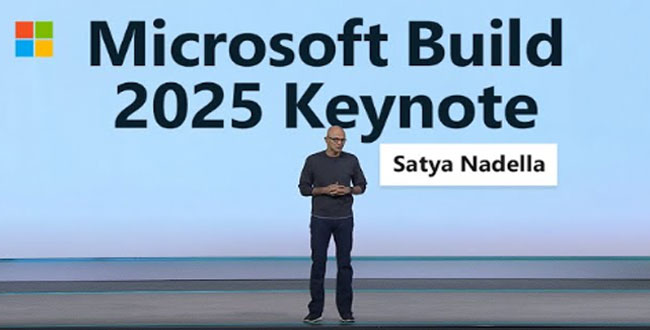
As the tech world converges on Seattle for Microsoft Build 2025, the annual developer conference has unveiled a suite of groundbreaking AI tools while navigating the complexities of global socio-political discourse. This year’s event, marked by the debut of Grok on Azure, GitHub’s AI Agent. Here’s an in-depth analysis of Microsoft’s strategic vision, its implications for industries, and the broader conversation about corporate responsibility in the AI era.
Grok on Azure: Democratizing Enterprise AI
Microsoft’s integration of Grok, Elon Musk’s AI chatbot, into Azure’s cloud infrastructure marks a pivotal shift in enterprise AI accessibility. Unlike traditional AI models that require extensive customization, Grok on Azure offers pre-trained, industry-specific modules for healthcare, finance, and logistics. Key features include:
- Real-Time Multilingual Support: Grok processes 12 languages natively, reducing latency in global customer service applications by up to 40% (Microsoft Case Study, 2024).
- Regulatory Compliance: Built-in tools auto-generate GDPR and CCPA documentation for AI workflows, addressing legal hurdles in sectors like fintech.
- Energy Efficiency: Azure’s quantum-inspired algorithms cut Grok’s training energy consumption by 30%, aligning with Microsoft’s 2030 carbon-negative pledge.
Satya Nadella, Microsoft CEO, emphasized during his keynote: “Grok on Azure isn’t just about automation—it’s about augmenting human expertise to solve problems at planetary scale.”
GitHub’s AI Agent: Revolutionizing Developer Workflows
GitHub’s new AI Agent transcends conventional code completion tools, functioning as a full-stack “developer collaborator.” Early adopters report a 55% reduction in debugging time (GitHub Insights, Q1 2025) due to features like:
- Context-Aware Debugging: The agent cross-references code with project documentation to predict and resolve errors.
- Ethical Code Audits: AI-driven scans flag biases in algorithms, such as discriminatory facial recognition patterns.
- Seamless Multi-Platform Deployment: One-click deployment to AWS, Google Cloud, and Azure streamlines DevOps pipelines.
A partnership with Stack Overflow will integrate the platform’s 20 million technical Q&A entries into the agent’s knowledge base by late 2025.
Consumer AI: Personalization Meets Privacy
Microsoft unveiled CoPilot+, a consumer AI suite embedded in Windows 12, designed to balance hyper-personalization with data security:
- Adaptive Learning: CoPilot+ analyzes user behavior to automate tasks like calendar scheduling, reducing administrative workload by 6 hours/week (internal Microsoft trials).
- Decentralized Data Storage: Leveraging blockchain, user data remains on-device, addressing privacy concerns raised by EU regulators.
- AI Art Studio: A Dall-E 3 competitor that generates copyright-compliant visuals for content creators.
Industry Impact and Market Projections
- Healthcare: Grok’s HIPAA-compliant modules are already being piloted at Mayo Clinic for predictive diagnostics.
- Education: Universities like MIT are testing GitHub’s AI Agent to teach coding ethics.
- Market Growth: IDC forecasts the AI tools market to hit $1.2 trillion by 2028, with Azure expected to capture 35% of cloud AI workloads.
Conclusion: Balancing Innovation with Accountability
Microsoft Build 2025 reflects a nuanced vision for AI’s future—one where technological leaps coexist with heightened ethical accountability. By embedding privacy, sustainability, and social governance into its tools, Microsoft is positioning itself not just as a market leader, but as a stakeholder in shaping AI’s societal impact. As Nadella noted, “The measure of AI’s success won’t be its intelligence alone, but its integrity.”