
 Brijesh Desai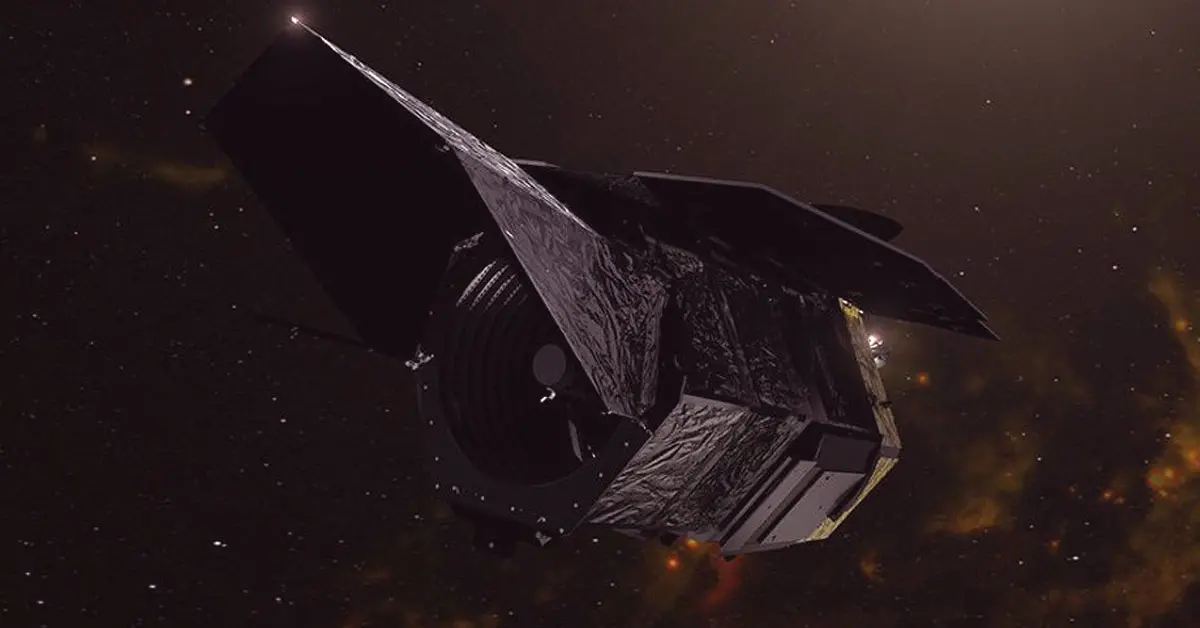
NASA launches Roman telescope aboard SpaceX Falcon Heavy Aug 30
NASA launches Roman telescope aboard SpaceX Falcon Heavy Aug 30
NASA launches Roman telescope aboard SpaceX Falcon Heavy Aug 30, sending the Nancy Grace Roman Space Telescope on a month-long journey to its operational home at the Sun-Earth Lagrange Point 2 (L2). The mission, scheduled for 5:50 pm IST from Launch Complex 39A at Kennedy Space Center in Florida, marks a major step in NASA’s next-generation astrophysics programme.
Roman is designed to conduct wide-field surveys of the universe, studying dark energy, dark matter, and exoplanets with unprecedented precision. Once it reaches L2, roughly 1.5 million kilometres from Earth, the telescope will orbit the Sun while maintaining a stable position relative to our planet, similar to the James Webb Space Telescope.
Mission and scientific goals
The Roman Space Telescope will carry out two primary types of observation:
- Wide-field imaging to map large areas of the sky with high resolution.
- Microlensing surveys to detect distant exoplanets, including those that are difficult to find with other methods.
These capabilities will help scientists better understand the expansion of the universe, the nature of dark energy, and the distribution of dark matter. Roman is also expected to discover thousands of new exoplanets, some of which may be Earth-sized and located in the habitable zones of their stars.
Launch vehicle and trajectory
NASA has chosen SpaceX’s Falcon Heavy rocket for the launch, leveraging its heavy-lift capacity to send Roman on a direct trajectory toward L2. After liftoff, the telescope will separate from the upper stage and begin its cruise phase, which is expected to last about a month before it reaches its final orbit.
The L2 point is a gravitationally stable region where the combined pull of the Sun and Earth allows spacecraft to maintain a relatively fixed position with minimal fuel consumption. This makes it an ideal location for long-duration observatories that require a stable thermal environment and continuous communication with Earth.
Why Roman matters
Roman complements other major observatories such as Hubble and JWST by focusing on wide-area surveys rather than deep, narrow-field observations. Its large field of view — 100 times that of Hubble’s Wide Field Camera 3 — will allow it to capture vast regions of the sky in a single exposure, enabling statistical studies of galaxies, stars, and planetary systems.
The mission is named after Nancy Grace Roman, often called the “mother of Hubble” for her pioneering work in establishing the Hubble Space Telescope programme. Roman’s legacy continues through this new observatory, which aims to answer some of the most fundamental questions in cosmology and planetary science.
Summary: NASA will launch the Nancy Grace Roman Space Telescope on August 30 aboard a SpaceX Falcon Heavy from Kennedy Space Center. After a month-long journey, Roman will reach the Sun-Earth L2 point to study dark energy, dark matter, and exoplanets with wide-field surveys.