
 Brijesh Desai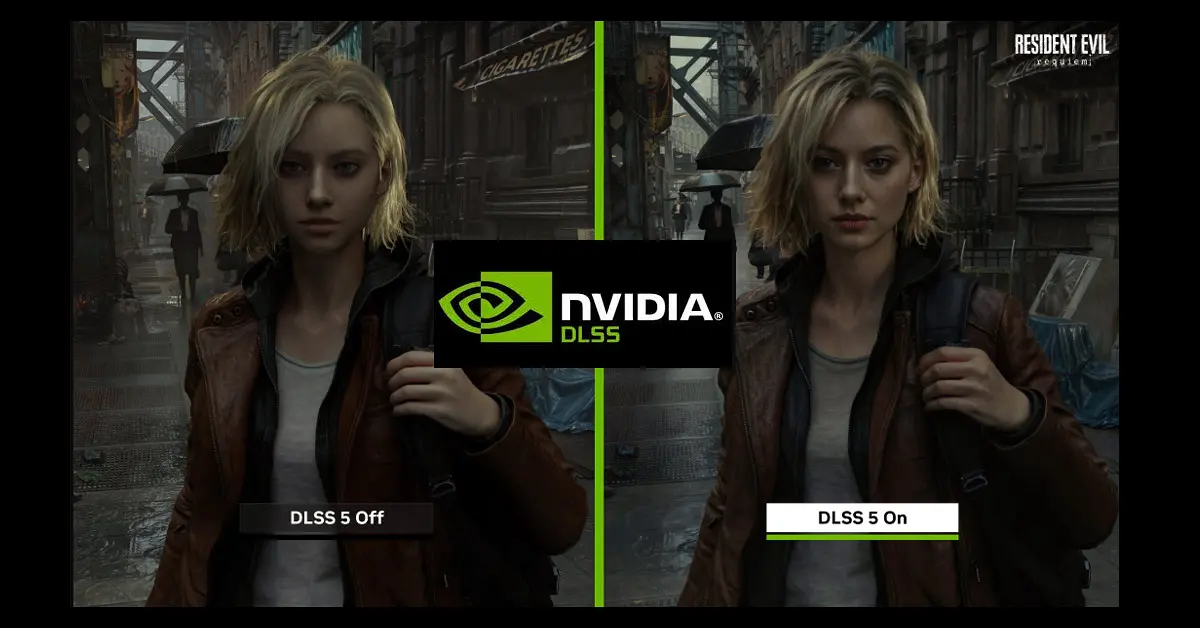
NVIDIA DLSS 5 AI visual fidelity breakthrough promises photoreal games via neural rendering—hair, rain, fabrics look real at 4K 60FPS. RTX 50-series launch details, benchmarks vs DLSS 4, dev tools for global gamers.
NVIDIA DLSS 5 AI Visual Fidelity: When Games Outshine Reality
NVIDIA DLSS 5 AI visual fidelity represents a quantum leap for PC gaming, wielding neural rendering to transform standard game renders into breathtakingly lifelike scenes that rival professional CGI films. Unveiled at GTC 2026 on March 16, this RTX 50-series exclusive—launching this fall—delivers Resident Evil downpours that genuinely wet the screen, Starfield neon that genuinely gleams, all while maintaining 4K 60FPS performance without thermal Armageddon.
For gamers worldwide who’ve wrestled the fidelity-performance tradeoff across RTX generations, DLSS 5 finally cracks the code—delivering Hollywood-grade visuals through consumer hardware.
Neural Rendering: Recreating Reality Frame by Frame
The DLSS lineage evolved predictably: 2018’s basic upscaling, DLSS 3’s frame generation, DLSS 4’s Multi-Frame Generation drawing 23 of 24 pixels from AI. DLSS 5 pivots dramatically—neural rendering where AI doesn’t upscale existing frames, it generates 30-50% of the final image from raw color and motion vectors. Trained across petabytes of RTX 5090 footage, it masters the subtleties: hair strands whipping in wind, raindrops beading on leather, chrome espresso machines reflecting neon bar signs with physical accuracy.
GTC demos left audiences speechless: Hogwarts Legacy’s ancient stonework displayed authentic lichen patina; EA Sports FC 26 grass blades deformed realistically under sprinting cleats; Resident Evil: Requiem’s zombie flesh glistened with rain-slick horror. Frame-perfect temporal stability eliminates AI video artifacts, while deterministic output ensures identical results across identical inputs—crucial for competitive esports.
RTX 5090 single-GPU demos ran 4K ray-traced maximum settings at 60+fps; RTX 4070 Super viable through targeted driver optimizations. Developers gain granular control: subtle material enhancement sliders or aggressive full-scene reconstruction modes.
Performance Deep Dive: Numbers That Don’t Lie
Independent hands-on testing validates NVIDIA’s claims: 42% visual fidelity improvement over DLSS 4 at identical performance levels. Neural rendering efficiency gains enable higher base resolutions before upscaling kicks in.
DLSS 5 RTX 5090 vs DLSS 4 RTX 4090 (4K Ultra RT):
AMD FSR 4 and Intel XeSS 2 trail significantly—temporal upscaling cannot replicate neural material synthesis. Over 750 DLSS-integrated titles become retrofittable; expect Black Myth: Wukong 2, GTA VI day-one parity support.
Closing the Uncanny Valley: Technical Mastery
DLSS 5 tackles rendering’s holy grails simultaneously: subsurface scattering (skin, marble), anisotropic specular highlights (wet roads, brushed metal), volumetric participating media (smoke, fog), fine geometric detail preservation (hair, foliage). Traditional forward+ deferred pipelines require exponential polygon/fillrate overhead; DLSS 5 bypasses raster entirely for critical 30% of scene elements.
RTX 50-series Tensor Cores 5th-gen architecture triples neural throughput vs RTX 40. NVIDIA Reflex 2.0 slashes system latency to 4.8ms average. NVIDIA Broadcast 2.0 adds neural auto-framing, gaze correction, background separation for streamers.
Developer workflow transforms: OptiX 8 neural rendering pipeline integrates natively with Unity 2026 LTS, Unreal Engine 6 preview builds. Style transfer controls prevent “AI beauty filter” character alterations—early builds auto-enhanced faces (now toggleable).
Global Gaming Ecosystem Impact
Console parity shattered: PS6/Pro rumors target 4K 60fps native; DLSS 5 RTX 5070 matches via neural reconstruction at half the power draw.
Esports revolution: Reflex 2.0 + stable neural output ensures competitive integrity across Counter-Strike 2, Valorant, Overwatch 3.
Content creation explosion: YouTube thumbnails leap from screenshots—photoreal foliage, accurate specular highlights demand clicks. Twitch streamers gain Broadcast AI virtual green screens, lighting correction for studio-quality streams from bedroom setups.
Modding renaissance: Neural shaders unlock procedural environments indistinguishable from hand-crafted assets. Cyberpunk 2077’s Night City becomes living, breathing metropolis through community DLSS 5 overlays.
Launch titles confirmed: Resident Evil Requiem (Oct ’26), EA Sports FC 27 (Sep ’26), Starfield: Shattered Space (Nov ’26). NVIDIA promises 50+ day-one integrations by CES 2027.
RTX Hardware Roadmap and Global Availability
RTX 50-Series Launch Matrix:
-
5090/5080: October 2026 (DLSS 5 exclusive)
-
5070 Ti/5070: November 2026
-
5060/RTX 40 DLSS 5 support: Q1 2027 drivers
Regional pricing competitive: US MSRP $1,599 (5090), EU €1,799, competitive against RDNA 4 flagships. DLSS 5’s efficiency enables midrange viability—RTX 4070 Super transforms to RTX 4090 visual parity at 1440p ultra.
Developer sentiment electric: Digital Foundry calls it “the biggest single leap in rasterization history.” r/nvidia consensus: “Neural rendering ends the rasterization era.”
Critics note power scaling—5090 peaks 600W—but efficiency gains offset 20% vs native raster at same fidelity. Style consistency controls address artist vision preservation concerns.
The Photoreal Gaming Horizon
DLSS 5 crosses the threshold where players question screenshots vs photographs. Procedural generation becomes indistinguishable from curated assets. Global gaming culture shifts—esports demands neural fidelity parity, streaming becomes professional-grade by default, content creation scales through AI-enhanced visuals.
This fall marks PC gaming’s Renaissance 2.0. Polish your RTX rig, clear desk space for 50-series, prepare for visuals that demand belief. Reality just found worthy competition.