
 Brijesh Desai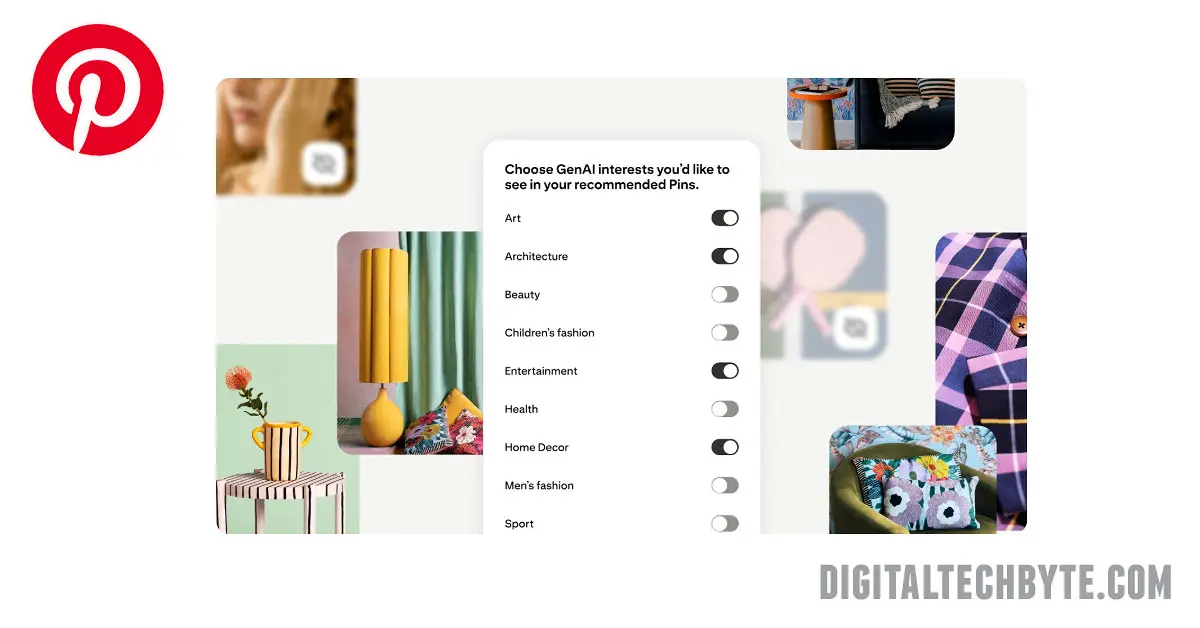
Pinterest AI content controls give users new ways to manage and personalize their experience with generative AI imagery, enhancing transparency and creative authenticity on the platform.
Pinterest AI content controls are officially rolling out, marking a bold new chapter for the visual discovery site. As social media platforms grapple with questions around authenticity, Pinterest is stepping ahead with practical transparency. Its latest AI-driven update puts control directly into users’ hands — a refreshing shift at a time when many feel overwhelmed by synthetic content flooding digital feeds.
The company announced that every user will now have access to tools allowing them to decide how much AI-generated content they wish to see. Whether it’s a clothing design dreamt up by Midjourney or a stylized interior concept generated through DALL·E, Pinterest’s goal is to let users explore creativity without sacrificing trust or personal preference.
How Pinterest AI Content Controls Work
These Pinterest AI content controls let users filter generative AI posts according to their comfort level. Settings include options to “Show All AI Content,” “Show Less,” or completely “Hide AI Content.” It’s an intentional effort to restore a sense of agency at a time when algorithms, not people, often dictate what we see online.
Pinterest has also introduced clearer labeling. Any pin discovered to be created by AI will now carry an “AI-generated” tag, ensuring that users instantly know what they’re viewing. This transparency aims to reduce misinformation while elevating authentic creators who rely on real photography, art, and design.
Executives from the company affirm that this update stems from its long-standing focus on “human-driven creativity.” According to Pinterest, the feature “helps maintain trust and creative authenticity” — two values the platform has championed since its inception.
Balancing Artificial Creativity and Authentic Discovery
This move arrives at a critical time when generative AI systems are redefining artistic boundaries. Social media today is teeming with AI-generated recipes, decor mockups, and fashion inspirations that blur the line between imagination and reality. While these visuals can spark fresh ideas, they also risk undermining creators who spend years honing their craft.
By releasing Pinterest AI content controls, the platform isn’t rejecting AI innovation — it’s refining how it integrates into everyday creativity. The approach respects AI’s potential for ideation while keeping user trust at the core. That’s a significant shift compared to other networks still figuring out how to label or regulate AI art responsibly.
Industry-Wide Implications
Pinterest’s proactive measures are likely to ripple across the tech sector. Rivals like Instagram, TikTok, and X could feel pressure to match its transparency standards. Furthermore, the update may align Pinterest with rising global regulations focused on digital truth in content presentation.
By clearly identifying AI-generated media, Pinterest is giving users and advertisers a choice anchored in clarity — a strategic move that could strengthen its reputation as a “positive corner of the internet” amid growing AI uncertainty.
A Redefined Meaning of Authentic Creativity
More than just a product update, the Pinterest AI content controls represent a cultural statement: that people crave control, not just consumption. Pinterest’s decision mirrors a growing sentiment — audiences want content that feels genuine, or at least honestly labeled.
In short, this isn’t about policing creativity; it’s about making space where creativity and integrity can coexist. Pinterest’s approach shows that platforms can harness technology without erasing the human touch that makes social media truly social.
And perhaps, that’s what keeps Pinterest beautifully different — a platform that continues to value the person behind the pin.