
 Brijesh Desai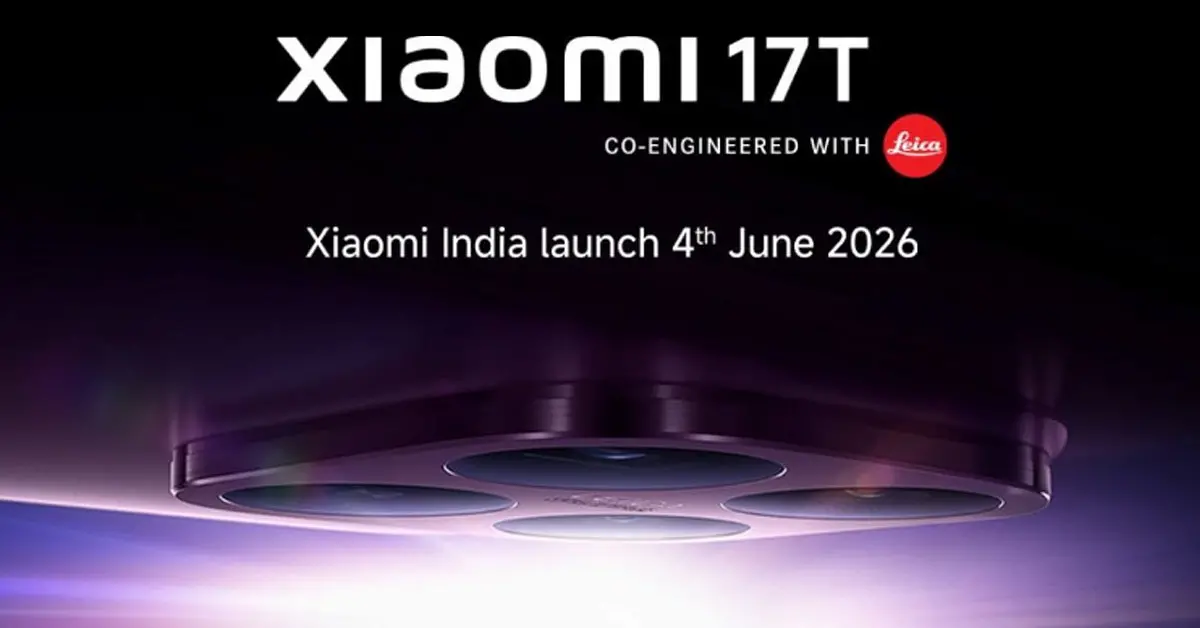
Xiaomi 17T India launch is locked for June 4, 2026, with a MediaTek Dimensity 8500 Ultra, Leica‑co‑engineered triple‑camera setup, 6,500mAh battery, 120Hz 1.5K AMOLED, and hyperOS 3 on Android 16; here’s what to expect from India pricing, variants, and how it compares to rivals like Vivo X300 FE.
Xiaomi 17T India launch locked for June 4: expected specifications, features and more marks a return of the brand’s popular T‑series to India after a four‑year gap, and the timing is no accident. The 17T is being positioned as a premium‑sub‑flagship aimed squarely at devices like the Vivo X300 FE, with a mix of Leica‑branded cameras, hefty battery life, and a slick 120Hz display tying things together. The India launch is now officially set for June 4, 2026, a week after the global unveiling in Vienna on May 28, and the leaks that have trickled out since then paint a pretty solid picture of what you can realistically expect.
When and where it’s launching
Xiaomi has already placed the 17T firmly on the India calendar, confirming that the device will hit the market on June 4, 2026 — the same day it’s expected to go live in select other regions. The last T‑series phone to land in India was the Mi 11T in 2021, and the 17T is being framed as a “spiritual successor” rather than a straight generational upgrade. That means it’s not just a refresh; it’s a re‑invigoration of the T‑series idea: flagship‑style cameras and display, mid‑range pricing, and a big‑phone‑for‑media‑consumption feel.
Rumour has it the 17T Pro is skipping India entirely this time, at least at launch, which makes the 17T the only T‑series option for the Indian market. That’s a bit of a downer for fans of the Pro line, but it also means Xiaomi can push the 17T as the “main” premium‑mid‑ranger without direct competition from its own sibling.
Expected specs: what the leaks say
Based on Indian tech outlets, FCC filings, and global leaks, here’s what most reviewers are converging on:
- Display
A roughly 6.59‑inch 1.5K AMOLED panel with a 120Hz refresh rate and peak brightness said to touch around 3,500 nits, which is bonkers‑bright by mid‑range standards. The 1.5K resolution gives you a bit more crispness than standard‑1080 phones without the power‑draw of a true 2K slice, which suits the 7000mAh‑class‑style battery‑life‑first approach. - Performance
Under the hood, the Xiaomi 17T is tipped to run on the MediaTek Dimensity 8500‑Ultra processor, backed by 12GB of LPDDR5X RAM and up to 512GB of UFS 4.1 storage on higher variants. That combo is comfortably in the “more than enough for gaming and multitasking” zone, especially if you’re not chasing the absolute‑top‑tier Snapdragon‑niche‑builds. The chipset is also reportedly tuned for better thermals and wireless efficiency, which matters for a phone that’s built to run heavy‑duty media‑watching and gaming sessions. - Battery and charging
The 17T is expected to pack a 6,500mAh silicon‑carbon battery, a big step up from the 5,000–5,500mAh norm in the sub‑₹60k premium‑mid space. Early leaks suggest 67W wired charging out of the box, with FCC documents hinting that Xiaomi might actually push that up to 100W wired charging in some regions — a big battery plus fast‑top‑up is a rare combo that could give rivals headaches.
Wireless charging is rumoured to be 50W on the 17T, which is slower than the 100W wired spec but still quick enough for a casual overnight top‑off. - Design and durability
On the outside, the 17T is shaping up to feel like a premium‑mid without the luxury‑tax. Early previews and leaks mention a glass‑backed body with an aluminum frame, plus IP68/IP69‑grade dust and water resistance, which is unusual for this price bracket. NFC, an IR blaster, and a dual‑stereo‑speaker setup are also on the leaks‑sheet, which makes it feel like a “carry‑one‑phone‑for‑everything” handset rather than a budget‑Q1‑style gadget.
Camera: the Leica‑tuned triple‑set
One of the big headline features in the Xiaomi 17T India launch locked for June 4: expected specifications, features and more pitch is the Leica‑co‑engineered triple‑camera setup, which is a big deal if you’re the kind of user who actually cares about colour science over just “megapixels.”
Leaked camera specs point to something like this:
- 50MP main sensor with OIS, backed by Leica’s colour and lens‑tuning.
- 50MP periscope telephoto with 5x optical zoom, giving you a decent‑range‑coverage camera that’s still usable in daylight.
- 12MP ultrawide camera for landscapes, group‑shots, and interiors.
- 32MP front‑camera up front for selfies and video calls.
If these figures hold up, the 17T’s camera system would slot in comfortably above the usual 48MP/64MP‑only‑main‑sensor setups in its price band. The 5x‑optical‑zoom lens is particularly interesting for a mid‑range‑targeted model; it’s usually reserved for full‑flagships, and its inclusion suggests Xiaomi wants to position the 17T as a “camera‑first, value‑second” device.
Software‑side, leaks point to hyperOS 3 based on Android 16, with Xiaomi’s recent camera‑UI tweaks and AI‑assisted‑scene‑detection routines baked in. That means you should expect features like AI‑portrait‑mode enhancement, night‑boost HDR, and multi‑frame‑noise‑reduction without needing a separate app. The Leica‑mode within the camera will likely offer a few preset‑“film”‑style profiles, giving you a bit more control over how much “Leica‑look” you want in your shots.
Software, features, and what it feels like to use
Performance‑wise, the Dimensity 8500‑Ultra + 12GB RAM formula is designed to keep the UI smooth and apps loaded, even if you’re juggling games, YouTube, and WhatsApp simultaneously. In practice, that should mean:
- No stutters in the 120Hz UI: Scrolling, game‑menu‑navigation, and social‑media feeds should feel fluid, even if you’re not running top‑end‑GPU‑settings everywhere.
- Solid day‑long battery life: The 6,500mAh cell, paired with a relatively efficient chipset and 1.5K resolution (rather than full‑QHD), should stretch you from morning to night even with heavy‑use habits, and 67W–100W charging means you can refill quickly between commutes.
- Good‑enough‑for‑gaming thermals: The Dimensity‑Ultra‑series nodes are known for better heat management than the earlier‑generation 8000 chips, so you should get a few hours of heavy‑gameplay before the back starts feeling seriously warm.
HyperOS 3’s recent tweaks have also leaned into battery‑optimization, AI‑driven‑background‑app management, and a cleaner, more iOS‑style notification‑and‑app‑drawer layout, which should make the 17T feel more minimalist and “premium‑Android” than the Xiaomi‑MIUI‑throwback UI of a few years ago.
How it fits the Indian market and pricing expectations
The Xiaomi 17T India launch locked for June 4: expected specifications, features and more story is really about value‑per‑rupee positioning vs. the likes of the Vivo X300 FE and other mid‑range‑flagship‑ambition phones. Based on early price‑prediction reports, Xiaomi is reportedly eyeing something in the ₹45,000–₹55,000 band depending on RAM/storage configuration, which is pretty aggressive if you’re throwing in a 120Hz 1.5K AMOLED, a Leica‑tuned 50MP triple‑camera, and a 6,500mAh battery.
For Indian buyers, that means the 17T could slot in as:
- A camera‑oriented mid‑range pick for people who want Vivo‑grade‑photo‑quality without the Vivo‑ecosystem‑lock‑in.
- A battery‑life‑focused option for power users who stream a lot, play games, and value the 67W–100W charging promise.
- A software‑compromise for MIUI/hyperOS fans who don’t mind Xiaomi’s quirks in exchange for the features and pricing.
Whether Xiaomi manages to keep the Pro‑level‑pricing‑feels‑like or eats a small margin hit on the 6,500mAh battery and 5x‑telephoto will be one of the more interesting questions when the India‑MSRP‑sheets are finalized.
Wrapping it up
If you’re the kind of shopper who prefers “good‑enough‑flagship‑specs on a mid‑range‑budget” over chasing absolute‑top‑tier‑chipsets, the Xiaomi 17T with its June 4 India launch sounds like a solid candidate. The 1.5K 120Hz AMOLED, Leica‑co‑engineered cameras, 6,500mAh battery, and hyperOS 3/A16 package are all ticking the right boxes for a “do‑everything” phone, even if the Pro‑variant isn’t tagging along to India just yet.
If you’re planning to buy, it’s worth keeping an eye on the launch‑day promos and bank‑and‑exchange‑offers, because Xiaomi’s track record in India means the headline price is rarely the final price you’ll end up paying.