
 Brijesh Desai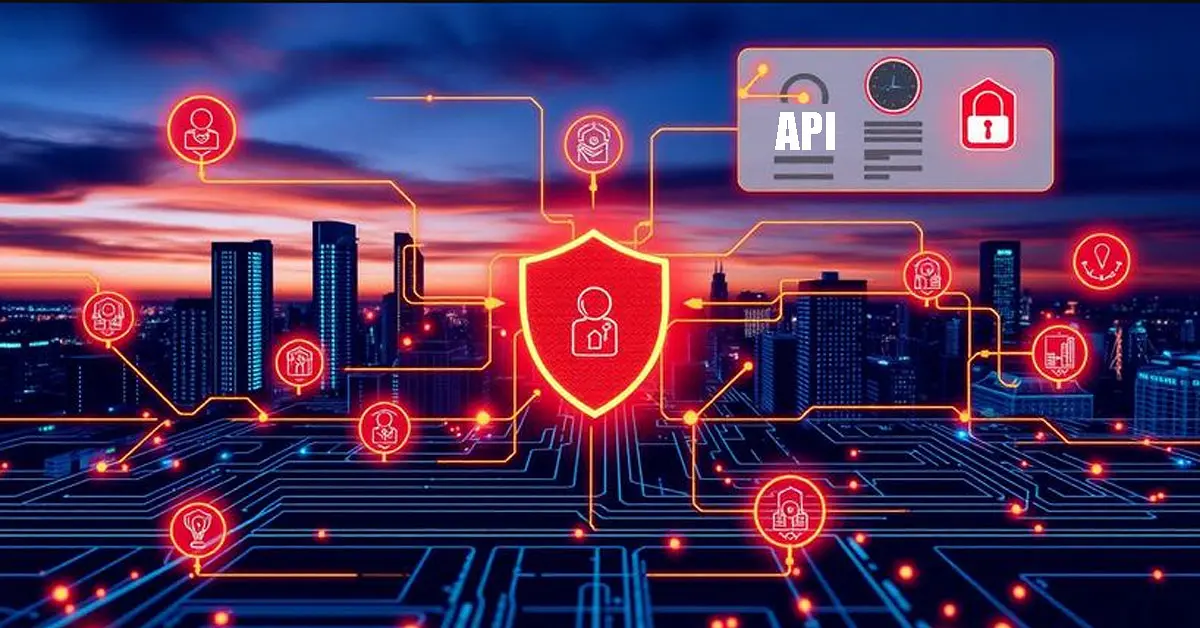
APIs Are Now the Most Important and Dangerous. APIs have grown from back-end technical connectors into one of the most important — and dangerous — aspects of modern enterprise infrastructure, driving data breaches, operational outages, and financial loss; here’s why organizations must treat APIs as critical infrastructure.
APIs have grown from back-end technical connectors into one of the most important — and dangerous — aspects of modern enterprise infrastructure.
Why APIs are now critical infrastructure
A decade ago, APIs were mostly internal plumbing: unseen glue between backend services, databases, and legacy systems. Today they are the primary interface through which:
- Mobile and web apps talk to backend services
- Partners and third‑party developers integrate with your platform
- AI agents, automation tools, and microservices exchange data
- Cloud services and SaaS platforms expose functionality
In effect, APIs have become the main nervous system of the enterprise. They drive digital transformation, enable new business models (platforms, marketplaces, developer ecosystems), and underpin almost every customer-facing and partner-facing interaction.
But with that strategic importance comes a corresponding risk surface:
- APIs are now the most frequent attack vector leading to data breaches in enterprise web applications. Gartner projected that by 2025, APIs would surpass other vectors as the #1 breach cause.
- They are often the least understood, least governed, and most exploited part of an organization’s security posture.
- Weak API governance exposes organizations to data breaches, operational interruptions, regulatory non‑compliance, financial loss, and reputational damage.
The core risks that make APIs dangerous
The danger of APIs isn’t that they’re inherently insecure; it’s that they’re pervasive, complex, and often under‑protected.
Key risks include:
Weak or missing authentication and authorization
APIs often rely on simple API keys, overly permissive scopes, or flawed token handling.
Weak authentication leads directly to backend system exploitation and data disclosure.
Lack of encryption and proper session management
Unencrypted traffic, improper TLS configuration, and poor session handling allow attackers to intercept or hijack API sessions.
Insufficient input validation and overly permissive access controls
APIs that don’t validate input or enforce least‑privilege access become gateways for injection attacks, privilege escalation, and mass data exposure.
Outdated software and legacy design assumptions
Initial API designs often fail to meet long‑term security and scalability requirements.
Leadership changes, strategy shifts, and rushed third‑party integrations compound these issues, leaving undocumented assumptions and legacy support in place.
Shadow and zombie APIs
undocumented or forgotten APIs (shadow APIs) and older, decommissioned-but-still-live APIs (zombie APIs) create unmonitored attack surfaces that attackers can exploit without detection.
Rapid adoption outpacing governance
The speed at which APIs are deployed often exceeds the development of governance frameworks, leaving organizations vulnerable to security threats and operational disruptions.
Business impact of insecure APIs
When APIs are compromised, the consequences ripple across the entire organization:
Technical impact
- System access by attackers, leading to backend compromise.
- Data disclosure, where sensitive business and customer data is exposed.
Operational impact
- Service outages that disrupt business operations and workflows.
- Delays in feature rollouts and updates due to remediation efforts.
Financial impact
- Lost revenue from service disruptions.
- Costs for incident response, service restoration, legal actions, and customer compensation.
- Fines and penalties for regulatory non‑compliance.
Reputational impact
- Damage to company brand and customer trust.
- Negative effects on customers’ own reputations if their data is breached through your APIs.
Treating APIs as critical infrastructure
Recognizing APIs as critical infrastructure — not just “technical connectors” — is essential for long‑term business stability and growth.
Key steps include:
Elevate API security to enterprise governance
- Treat APIs with the same rigor as core network, database, and identity systems.
- Establish clear ownership, policies, and accountability for API security.
Implement strong API governance and monitoring
- Maintain a complete API inventory (including shadow and zombie APIs).
- Monitor all API traffic for anomalies, abuse, and policy violations.
Secure APIs by design
- Enforce strong authentication (e.g., OAuth 2.0, MFA where appropriate).
- Use short‑lived, rotating credentials and automatic key rotation.
- Apply rate limiting and throttling to prevent DoS and credential stuffing.
Automate credential and lifecycle management
- Use automation to manage API keys, tokens, and secrets.
- Continuously monitor for anomalous API traffic and detect issues in near real time.
Ensure product parity across environments
- Verify that on‑premise and SaaS/cloud API implementations have consistent security controls.
- Avoid security gaps introduced during cloud transitions.
Adapt security controls to the API era
- Traditional perimeter and network security are insufficient.
- Security teams must evolve to protect API-first, cloud-native systems with specialized tools and practices.
APIs are no longer a back‑end concern; they are the front door to your enterprise’s data and services. The same properties that make them powerful — interoperability, speed, and scale — also make them highly attractive targets. Organizations that treat APIs as critical infrastructure, with dedicated governance, monitoring, and security controls, will be the ones that can safely harness their potential without paying the price in breaches, outages, and lost trust.