
 Brijesh Desai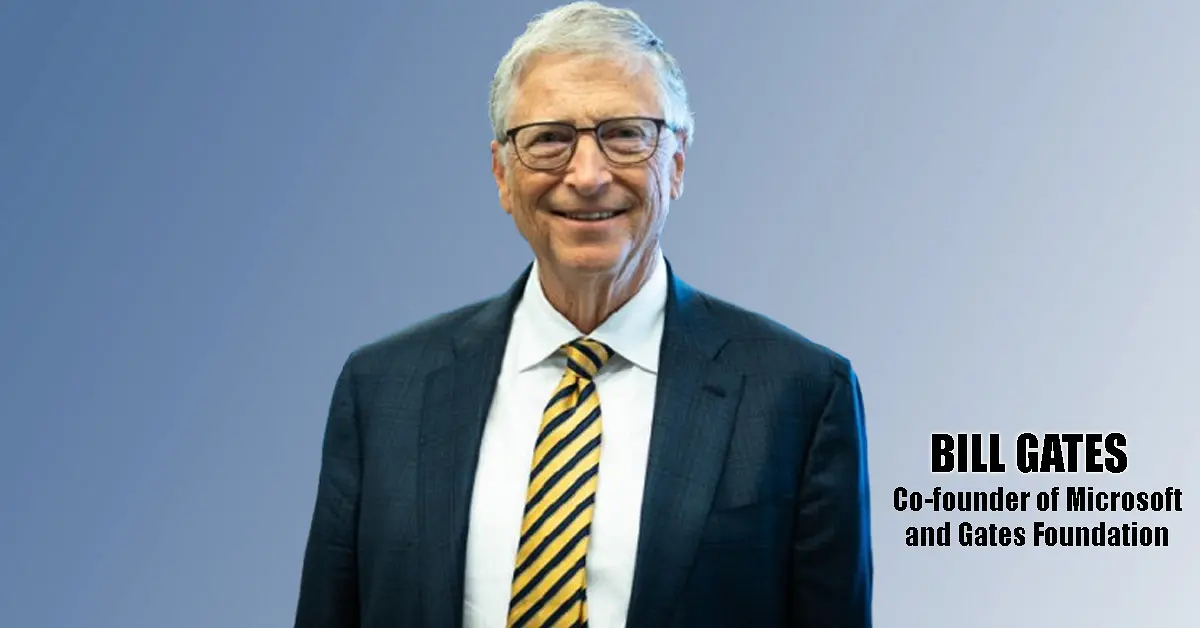
Bill Gates warns AI could close or widen global inequality, depending on whether governments prepare for job disruption, unequal access, and the concentration of AI wealth.
Bill Gates warns AI could close or widen global inequality
Bill Gates warns AI could close or widen global inequality, arguing that the technology could become either “the greatest equalizer ever invented” or “the worst source of injustice.” In a nearly 6,000-word essay published on GatesNotes, the Microsoft co-founder said governments, businesses, and communities are not preparing adequately for the economic and social disruption that advanced AI may bring.
Gates said AI could improve access to education, healthcare, financial services, and productivity tools for people who currently lack them. But he also warned that the benefits could be captured mainly by wealthy companies and countries, while workers with limited bargaining power bear the cost of automation.
Why AI could reduce inequality
Gates sees several areas where AI could help narrow existing gaps:
- Education: AI tutors could provide personalised explanations and practice at a lower cost than private tutoring.
- Healthcare: AI systems could help doctors in underserved regions with diagnosis, triage, and medical research.
- Productivity: Small businesses and workers could gain access to tools that were previously available only to large companies.
- Public services: Governments could use AI to improve benefit delivery, translation, and access to information.
If these systems are affordable, reliable, and available in multiple languages, they could give people in lower-income regions access to expertise that has traditionally been concentrated in major cities and wealthy institutions.
The risk of mass job disruption
Gates’ larger concern is the speed at which AI may replace or reduce demand for human labour. He said the impact could reach both office and blue-collar work, including customer service, administration, coding, analysis, and some physical jobs as robotics improves.
The most vulnerable workers may be those earning modest wages and those entering the workforce for the first time. If companies automate entry-level roles, young people could lose the traditional first step into professional careers. Gates argued that workers who need more time to adapt often have the fewest resources to retrain or move into better-paid occupations.
He also suggested that some jobs may disappear permanently rather than being replaced by equally large numbers of new roles. That would make the transition different from earlier technological revolutions, where new industries created substantial employment opportunities.
A global divide in AI access
The inequality problem is not limited to individual workers. Gates warned that the AI transition could widen the gap between countries with advanced computing infrastructure and those without reliable internet, data centres, education systems, or access to capital.
Wealthy nations and large technology companies can train and deploy powerful models at scale. Developing countries may instead become dependent on foreign providers, paying for access without developing their own technical capacity or retaining control over critical data.
The result could be a new form of digital dependency in which a small group of companies controls the models, chips, cloud platforms, and data needed to participate in the AI economy.
Gates’ proposed safeguards
Gates called for governments to start planning before unemployment rises sharply and public trust declines. His suggestions include:
- Stronger education and retraining systems.
- International cooperation on AI governance.
- New forms of taxation on AI tokens, automated systems, or robots.
- Policies that ensure AI-generated wealth is shared more broadly.
- Protecting certain roles as “Human Reserved” jobs where human involvement is socially or ethically important.
He did not argue that all automation should be stopped. Instead, Gates said society should decide where automation creates genuine benefits and where preserving human participation matters more than reducing costs.
Why the warning matters now
Gates’ argument arrives as AI companies compete to deploy increasingly capable systems across coding, customer service, research, and professional work. The question is no longer whether AI will affect employment, but how quickly the effects will appear and who will benefit.
Without public policy, the gains may flow disproportionately to companies that own the models and infrastructure. With careful planning, the same technology could make expert services cheaper and more widely available.
Summary: Bill Gates warns AI could close or widen global inequality depending on how governments and businesses manage job displacement, access, taxation, education, and ownership. He believes AI could transform healthcare and learning for the better, but only if society acts before the economic disruption becomes severe.