
 Brijesh Desai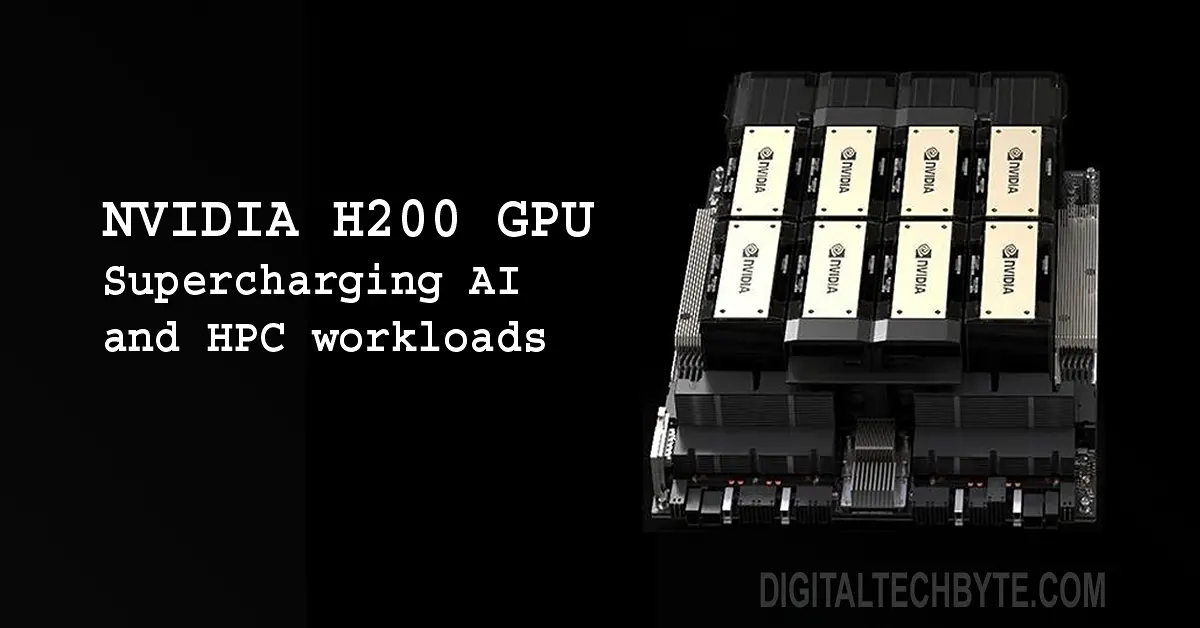
Trump bows to China pressure? The US is reportedly seeking a compromise over Nvidia H200 AI chip exports to China, balancing national security worries with tech and trade interests in a high‑stakes semiconductor standoff.
Trump bows to China pressure? That’s the provocative question hanging over Washington as reports suggest the US is exploring a compromise on exports of Nvidia’s H200 AI chips to China. The move would mark a notable shift from earlier hardline curbs on advanced semiconductors, reflecting an uncomfortable reality for the Trump administration: the US wants to keep its technological edge over Beijing, but it also doesn’t want to completely cut American chipmakers off from one of their biggest markets.
What’s At Stake With Nvidia’s H200 AI Chips
At the centre of this tug of war is Nvidia’s H200, one of the company’s most powerful data‑centre GPUs, designed to train and run cutting‑edge AI models. These chips are the backbone of the current AI boom, powering everything from large language models to recommendation engines in cloud platforms. Precisely because they’re so capable, they’re also seen in Washington as “dual‑use” technology that could supercharge China’s military and surveillance capabilities if shipped without restrictions.
Under earlier export rules, the US clamped down on sending Nvidia’s highest‑end AI chips to China and forced the company to design toned‑down variants for that market. Now, according to leaks cited in recent reporting, officials are weighing a middle path: allowing certain H200‑class chips to be exported in downgraded form, with strict performance caps and licensing, instead of an outright ban. On paper, that lets the US claim it’s still protecting sensitive tech, while giving Nvidia a way to keep selling into China.
Is Trump Really Bowing To China?
The “Trump bows to China pressure” framing is politically explosive, but the reality looks more like a messy compromise than a clean surrender. On one side, you have Chinese pressure and commercial lobbying: Beijing has warned of retaliation, and American chip firms have quietly argued that losing China would mean losing billions in revenue, R&D budgets, and jobs at home. On the other, you have US hawks warning that relaxing controls could accelerate China’s progress in AI, closing the gap in areas Washington considers strategically vital.
The reported compromise talks suggest Trump’s team is trying to thread that needle. A typical package might include:
-
Allowing only cut‑down H200 variants below a defined performance threshold.
-
Tight end‑user and end‑use checks to keep chips away from military‑linked entities.
-
A licensing regime that can be tightened again if China is seen abusing access.
Critics, especially on the national‑security right, argue that any climb‑down will be painted in Beijing as proof US pressure can be blunted. Supporters counter that if US suppliers step back entirely, Chinese firms will simply double down on domestic alternatives, starving American companies of revenue while not actually stopping China’s AI push.
The Domestic And Global Fallout
Inside the US, the Nvidia question is part of a broader fight over how far to go in “decoupling” from China. Tech investors and Silicon Valley executives generally favour calibrated controls, not blanket bans, warning that overreach could hurt US innovation more than China’s. Hard‑liners in Congress, meanwhile, see advanced chips as the new oil and want strict guardrails, even at an economic cost.
Abroad, allies are watching closely. Japan, the Netherlands and others have already aligned with Washington on restricting advanced chipmaking tools to China. If the US now carves out room for more AI chip exports, partners will want to know whether the strategy is shifting from outright denial to managed dependency—where China can buy some capability, but never the very best.
And of course, China will spin any softening as a win. State media is likely to frame a compromise as evidence that US pressure is unsustainable and that Washington ultimately needs Chinese demand as much as Beijing needs foreign tech.
Why This Matters Beyond Nvidia
The debate over H200 exports isn’t just about one company or one product line. It’s a test case for how the US intends to handle the entire next wave of AI hardware and software controls. If Washington settles on a “high fence around the crown jewels” approach—shielding the absolute top tier while allowing controlled sales of slightly older or weaker tech—that template could spread to other sectors, from quantum computing to biotech.
For businesses and developers building on Nvidia hardware, a compromise could mean continued access to a large Chinese customer base and stable roadmaps, instead of a whiplash pattern of bans and emergency redesigns. For policymakers, the risk is that the line between safe and dangerous exports is inherently blurry, and every exception becomes an opening to be exploited.
In the end, whether Trump is truly bowing to China pressure or simply bowing to geopolitical reality depends on your vantage point. What’s clear is that the Nvidia H200 fight is a preview of many similar battles to come, as AI, chips and geopolitics become inseparable—and every technical spec sheet turns into a diplomatic negotiating table.